|
|
 |

Is AI Reversing Anti-Progress or Is It Accelerating It? June 10, 2026
Perhaps it's time to admit that AI hype is self-serving propaganda, and that we're actually living in a Philip K. Dick-type dystopia.
Consider the depth and consequences of the widening gap between these headlines. One the one hand, we're awash in articles proclaiming the immense value being generated by AI and the promise of future value that's beyond our imagination. But if we set aside the sci-fi promises of AI discovering miracle drugs that cure every disease and focus on what AI is actually being used for, it boils down to 1) increasing corporate revenues and 2) increasing corporate profits by reducing costs. That's it. There is nothing else except clickbait headlines intended to create a PR-propaganda illusion that fantastic advances are just around the corner, just you wait. But in the real world, AI is solely focused on increasing corporate profits via streamlining workflows and increasing productivity. There are hundreds of headlines along these lines: How AI is reshaping workflows and redefining jobs (mitsloan.mit.edu) Here's the short version: Corporations are in a frenzy to use AI to jack up revenues via extraction rather than creating value, and boosting profits by slashing payrolls and costs. This is evident in headlines such as this: Why are US consumers so angry? It's not just high prices. (theguardian.com) First, her longtime vet, now part of a national chain, overcharged her $500 for her dog's teeth cleaning and didn't issue a promised refund. Then, her big box supermarket promoted a coupon on its app that wasn't applied at the checkout, costing her $30 and a trip back to the store. Finally, her health insurance company rejected her son's $1100 dental bill that she had been told would be 50% covered, despite protracted haggling. "It's like Whac-A-Mole," the mother of two said. "You finish one and up pops another one." "It feels like a war on consumers," said Sally Greenberg, the executive director of the National Consumers League, a 125-year-old consumer advocacy group. "Households are being hit by "a tsunami of fees and hidden charges and tricks and traps," she said. Peter Fader, a Wharton School marketing professor, said, "But not only does service just suck, consumers are starting to realize that a lot of the cool data and technology is being used against them." This isn't the FantasyLand story of corporations "creating value," it's the ugly real-world story of corporations increasing profits by controlling markets to extract more revenues while reducing value. In my book Investing In Revolution I explain that once companies eliminate real competition via monopoly, cartels or regulatory capture (deceptively called "market forces"), they become privatized totalitarian structures that corral consumers so they can be exploited to maximize extraction / profits without pushback from either the consumers or a controlled-by-the-highest-bidder state that enables privatized totalitarianism because a trickle of the trillions in profits flows to state insiders. The ceaseless reduction of value and the expansion of data collection technologies to maximize extractive profiteering has a name: Anti-Progress, for declining quality and value coupled with higher costs and reduced alternatives (i.e. real competition) is not Progress, though it's ceaselessly touted as "Progress" by the corporations feasting on Anti-Progress to maximize profits by any means available. Streamlining workflows and increasing productivity are not devoted to improving the quality of life of the populace or benefiting the shared interests of society; the single-minded goal is using AI to maximize profits via extraction. The difference between a totalitarian state (no competition) and totalitarian monopolies and cartels (no competition) is, well, the difference between privatized extraction and state extraction. In the US, we have the worst of both worlds: an extractive state that funds and enables extractive privately owned corporations. Ask yourself an honest question--yes, that's difficult in a system that incentivizes artifice and self-serving deception: what exactly has AI done to improve real-world life in terms of quality and cost? Even what's touted turns out to be extractive, distorting Anti-Progress. That AI is now our new best friend is not Progress, and neither is the core impossibility of trusting AI "answers" to be useful. The core problem isn't just the illusion of "Progress" used to cover exploitive extraction; it's that AI is deceptive by its very nature, as it implicitly presents a probability distribution as fact, truth, judgment, thinking and understanding, when it cannot possibly be any of these. This article explains this clearly and succinctly: AI and human intelligence are drastically different--here's how. (scientificamerican.com) The deeper issue is that the model cannot know when it is "hallucinating" because it cannot represent truth in the first place. It cannot form beliefs, revise them or check its output against the world. It cannot distinguish a reliable claim from an unreliable one except by analogy to prior linguistic patterns. In short, it cannot do what judgment is fundamentally for. People are already using these systems in contexts in which it is necessary to distinguish between plausibility and truth, such as law, medicine and psychology. A model can generate a paragraph that sounds like a diagnosis, a legal analysis or a moral argument. But sound is not substance. The simulation is not the thing simulated. They are engines of linguistic automation, not engines of understanding. They excel at drafting, summarizing, recombining and exploring ideas. But when we ask them to judge, we unintentionally redefine judgment--shifting it from a relation between a mind and the world to one between a prompt and a probability distribution. Remember that smoothness is not insight, and eloquence is not evidence of understanding. Here's a short list of the many examples of AI generating Anti-Progress on multiple fronts, including but not limited to extractive exploitation: In the USA, the level of vigilance the average person has to maintain to avoid getting ripped off extracts its own kind of price -- one most analysis of dynamic pricing doesn't pay any attention to. (Tim Wu) I think the Boomer/Gen Z discourse boils down to one thing and one thing alone: The America that Boomers grew up in put American families and American workers first. The America that Gen Z is growing up in puts literally everything else first. We need a new regulatory paradigm to contain AI and prevent institutional collapse. A quick explanation. The Record Divide Between Corporate Profits and Worker Pay: Labor's share of economic output just hit an all-time low, while the profit share hit a near record. It helps explain why consumers feel so glum. (wsj.com) 'It's never enough': young Americans struggle to build financial independence as cost of living spikes/ A difficult job market and rising costs are making it harder for young adults to enter adulthood. Lastly, consider this question: How can we tell good AI from bad? (ft.com) Short answer: we can't, and the gap between being able to ascertain the good from the bad is widening at an accelerating pace. This is what we've been seeing with every company we work with. Try justifying spending 100k on token spend when only 18k even makes it to a stable product feature. Very interesting data across 2,444 companies. 82% of tokens are spent on AI-generated bugs, rework and review friction. 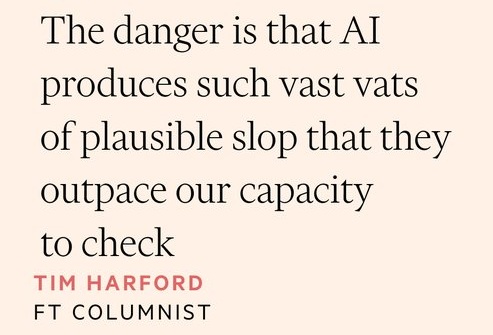
Please note what's missing from this list of AI concerns: "AI is improving my quality of life, reducing complexity and costs, and eliminating AI slop and extractive corporate exploitation at such a dizzying pace I wish it would slow down the vast improvements in my life so I can catch my breath." 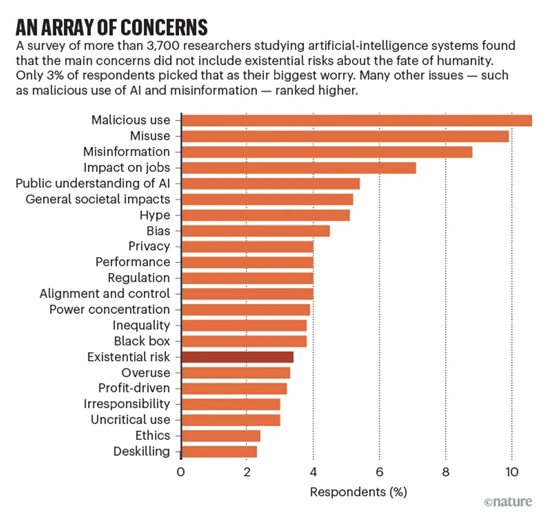 Is AI Reversing Anti-Progress or Is It Accelerating It? The answer is it's accelerating Anti-Progress in every nook and cranny of the economy, society and culture. Perhaps it's time to admit that AI hype is self-serving propaganda, and that we're actually living in a Philip K. Dick-type dystopia in which we're constantly told AI will cure the diseases it's creating at some point in the future, while it generates more diseases at an ever-accelerating pace.
My book Investing In Revolution is available at a 10% discount ($18 for the paperback, $24 for the hardcover and $8.95 for the ebook edition). Introduction (free) Become a $3/month patron of my work via patreon.com Subscribe to my Substack for free My recent books: Disclosure: As an Amazon Associate I earn from qualifying purchases originated via links to Amazon products on this site. THE REVOLUTION TRILOGY: Investing In Revolution Ultra-Processed Life The Mythology of Progress Systemic Problems/Solutions Investing In Revolution (2025) Introduction (free) The Mythology of Progress (2024) Introduction (free) Global Crisis, National Renewal (2021) Introduction (free) Money and Work Unchained (2017) Introduction (free) A Radically Beneficial World (2015) Introduction (free) What You Can Do Yourself Ultra-Processed Life (2025) Introduction (free) Self-Reliance in the 21st Century (2022) Introduction (free) When You Can't Go On: Burnout, Reckoning and Renewal (2022) Introduction (free) Get a Job, Build a Real Career and Defy a Bewildering Economy (2014) Intro (free) Novels The Adventures of the Consulting Philosopher Intro (free) The Secret Life of an Asian Heroine First chapters (free) Become a $3/month patron of my work via patreon.com. Subscribe to my Substack for free Investing In Revolution print $18, (Kindle $8.95, Hardcover $24 (145 pages, 2025)  Only now do we see that we've been investing in revolution for decades--not the revolutions we thought we were investing in, revolutions in technology and finance, but in the social revolution made inevitable by the extremes that we've reached in our single-minded pursuit of private gains.
The pendulum that we've pushed to an extreme will swing to the opposite extreme, and the artifices that have propped up a facade a stability for decades will accelerate the disorder rather than reverse it. We now stand at the point of decision, and this book offers a path to a reformation and renewal that serves the shared interests of us all, not just the few. Introduction (free) Ultra-Processed Life print $16, (Kindle $7.95, audiobook, Hardcover $20 (129 pages, 2025)  Ultra-Processed Life: the substitution of a synthetic, commoditized, very profitable facsimile for what was once authentic.
Ultra-Processed Life is my term for everything that is analogous to ultra-processed snacks: attractively marketed, instantly alluring, easy to consume, addictive by design, tasty in the moment but harmful over time, its origins a black box of unknown processes, the brightly colored product bearing no resemblance to the real-world ingredients, an idealized form of what is inherently imperfect, untethered from the natural world. As with many others, the catalyst for my exploration was a life-threatening medical crisis that did not have a specific cause. This led me to wonder if our entire way of life is like an ultra-processed snack: tasty but not healthy, edible but stripped of the nutrients we need to be healthy, addictive by design. Introduction (free) The Mythology of Progress, Anti-Progress and a Mythology for the 21st Century print $20, (Kindle $9.95, Hardcover $24 (215 pages, 2024) audiobook, Read the Introduction and first chapter for free (PDF) 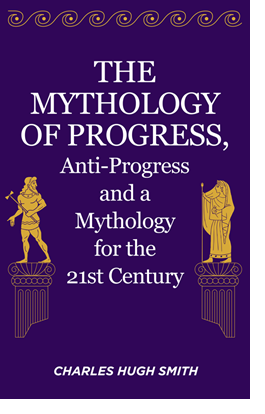 What if the policies to accelerate growth are no longer working because our fix for every problem--growth at any cost--is failing? We're told Progress is inevitable as a result of technology, but everyday life is getting harder, not easier--the opposite of Progress, what I call Anti-Progress.
What if the real source of the unraveling is far deeper than economics or politics? What if the problem is what we see as the inevitable destiny of humanity--Progress--is actually a modern mythology, disconnected from the real-world consequences of growth for growth's sake? We indignantly reject that Progress is a mythology, but our need for mythology hasn't gone away because we've mastered technology; we've created a modern mythology of technology that is heedless of its own consequences. To truly progress, we need a new mythology aligned to 21st century realities. Read the Introduction and first chapter for free
Recent entries: Is AI Reversing Anti-Progress or Is It Accelerating It? June 10, 2026 Choose One: Housing Is Shelter, or Housing Is Just Another Asset in a Bubble Economy June 4, 2026 AI Data Centers Are Not the Railroads of Today June 1, 2026 Could Instability Trigger Radical Change In Your Life? May 28, 2026 Why Is Consumer Sentiment at Record Lows? May 27, 2026 The Overstuffed Freezer Analogy May 25, 2026 When Unfairness Is Systemic, the Consequences Are Flight, Resistance, Revolt May 20, 2026 Inequality, AI and Digital Life Are Undermining Society May 19, 2026 We've Optimized Fragility, Failure, Denial--and Rage May 18, 2026 Remember: In a Crisis, Everyone Will Consider Themselves 'The Good Guys' May 13, 2026 Chaos Unleashed: When "Irrational" Makes Perfect Sense May 12, 2026
When US Treasuries Play a Reverse Card
May 11, 2026

Contributions/subscriptions are acknowledged in the order received. Your name and email remain confidential and will not be given to any other individual, company or agency. All contributors are listed below in acknowledgement of my gratitude.
Mastery requires reading and doing.
Of Two Minds Site Links home musings my books archives books/films policies/disclosures social media/search Aphorisms How to Contribute, Subscribe/Unsubscribe sites/blogs of interest original music/songs Get a Job (book) contributors my definition of success why readers donate/subscribe to Of Two Minds mobile site (Blogspot) mobile site (m.oftwominds.com)
HUGE GIANT BIG FAT DISCLAIMER: Nothing on this site should be construed as investment advice or guidance. It is not intended as investment advice or guidance, nor is it offered as such.... (read more) WHY EMAIL TO THIS SITE IS READ BUT MAY NOT BE ACKNOWLEDGED: Regrettably, I am so sorely pressed for time and energy that I am unable to respond to the vast majority of emails. Please know I read all emails, but I can only devote a very limited number of hours to this blog and all correspondence.... Subscriptions to the Weekly Musings Reports Subscribers enable Of Two Minds to post free content. Without your financial support, the free content would disappear for the simple reason that I cannot keep body and soul together on my meager book sales alone. Your financial support is very much appreciated. Subscribers ($7/mo) and those who have contributed $70 or more annually receive weekly exclusive Musings Reports ($70/year is about $1.35 a week). Each weekly Musings Report offers four features: 1. Exclusive essay on an extraordinarily diverse range of insightful topics 2. Summary of the blog this week 3. Best thing that happened to me this week 4. From Left Field (a curated selection of interesting links) There are four easy ways to subscribe: Substack, Patreon, US Mail and Paypal: How to Contribute, Subscribe/Unsubscribe to Of Two Minds What subscribers are saying about the Musings: "What makes you a channel worth paying for? It's actually pretty simple - you possess a clarity of thought that most of us can only dream of, and a perspective that allows you to focus on the truth with laser-like precision." Jim S. Thank you very much for supporting oftwominds.com with your subscription or contribution.
Extra-Special Bonus Aphorisms:
"There is no security on this earth; there is only opportunity." (Douglas MacArthur) "We are what we repeatedly do." (Aristotle) "Do the thing and you shall have the power." (Ralph Waldo Emerson) "Any intelligent fool can make things bigger, more complex, and more violent. It takes a touch of genius and a lot of courage to move in the opposite direction." (E.F. Schumacher, via Tom R.) "He who will not risk cannot win." (John Paul Jones) "When we drink coffee, ideas march in like the army." (Honore de Balzac) "Progress is not possible without deviation." (Frank Zappa, via Richard Metzger) "Victory favors those who take pains." (amat victoria curam) "The man who has a garden and a library has everything." (Cicero, via Lee Bentley) "A healthy homecooked family meal and a home garden are revolutionary acts." (CHS) "Do you know what amazes me more than anything else? The impotence of force to organize anything." (Napoleon Bonaparte) "The way of the Tao is reversal" Or "Reversal is the movement of Tao." (Lao Tzu) "Chance favours the prepared mind." (Louis Pasteur) "Success consists of going from failure to failure without loss of enthusiasm." (Winston Churchill) "Where there is ruin, there is hope for treasures." (Rumi) "The realm of gratitude is boundless." (CHS, 11/25/15) "History doesn't have a reverse gear." (CHS, 12/22/15) Smith's Law of Conservation of Risk: Every sustained action has more than one consequence. Some consequences will appear positive for a time before revealing their destructive nature. Some consequences will be intended, some will not. Some will be foreseeable, some will not. Some will be controllable, some will not. Those that are unforeseen and uncontrollable will trigger waves of other unforeseen and uncontrollable consequences. (July 8, 2014)(thanks to Lew G. for retitling the idea.) Smith's Neofeudalism Principle #1: If the citizenry cannot replace a kleptocratic authoritarian government and/or limit the power of the financial Aristocracy at the ballot box, the nation is a democracy in name only. The Smith Corollary to Metcalfe's Law (The Network Effect): the value of the network is created not just by the number of connected devices/users but by the value of the information and knowledge shared by users in sub-networks and in the entire network. (CHS, 4/6/16) My Credo of Liberation: I no longer care if the power centers of our society--the distant, fortified castles of our financial feudal system--are changed by my actions, for I am liberated by the act of resistance. I am no longer complicit in perpetuating fraudulent feudalism and the pathology of concentrated power. I no longer covet signifiers of membership in the Upper Caste that serves the plutocracy. I am liberated from self-destructive consumerist-State financialization and the delusion that debt servitude and obedience to sociopathological Elites serve my self-interests. (Thank you, Klaus-Peter L., for reminding me) "We've become a culture of excuses rather than solutions: solutions always require sustained effort and discipline." (CHS 4/9/16) "Fraud as a way of life caters an extravagant banquet of consequences." (CHS 4/14/16) "Creativity = problem solving = value creation." (CHS 6/4/16) "Truth is powerful because it is the core dynamic of solving problems." (CHS 7/21/17) "We live in a system of human emotions that masquerades as a science (economics)." (CHS 1/1/18) "Always remember, your focus determines your reality." (George Lucas) "Diversity is for poor people. Sameness is for the successful." (GFB) "When power dissipates suddenly, it dissipates completely." (CHS 7/14/19) "Disobedience is the true foundation of liberty. The obedient must be slaves." (Henry David Thoreau) "Markets cannot price in the value of non-monetized natural assets such as diverse ecosystems." (CHS 7/14/19) "Magical thinking isn't optimism, it is folly." CHS 1/3/22) "Tune in (to self-reliance), drop out (of hyper-consumerism and debt-serfdom) and turn on (to relocalizing capital and agency)." (CHS 1/5/22) "The path to everything you desire starts here: like yourself as you are right now." (CHS 11/20/22) "There are only two signals: how many essentials you produce and share and if you're consuming less with better results. Everything else is noise." (CHS 12/17/22) "Liberation is no longer needing any confirmation or feedback from others or the world for one's sense of self. Wealth, fame, recognition, admiration, praise, prestige, approval, sainthood, martyrdom, success: none are needed, none are desired." (CHS 12/26/22) "When fame, wealth, prestige, status and glory are out of reach, you're free to pursue other more valuable things." (CHS 2/6/22) "It is the sacred duty of every activist who seeks to better their community to grow and share as much life-giving food as is humanly possible." (CHS 6/15/23) "Being anonymous, gray and unknown is the ideal state of freedom." (CHS 3/15/24) "We seem to have entered a world of anti-leisure and anti-productivity in which the unpaid shadow work demanded to keep all the complicated digital bits in motion obliterate our leisure and productivity." CHS (5/22/24) "It is axiomatic that failing systems work the best just before they fail catastrophically." Ray W. "Looking younger is mere technique; thinking younger demands creativity." CHS (10/16/24) "Tell me what's taboo and I'll tell you the truths that threaten the status quo." CHS (12/15/24) "This is the core of the Attention Economy: the ultimate addiction is the addiction to ourselves." CHS (1/28/25) "If You Seek the Truth, Look for What's Taboo." CHS (7/18/25) "My definition of self-reliance: the less you need, the easier it is to get what you need." CHS (7/26/25) "Mastery requires reading and doing." CHS (7/28/25) "The replacement of authentic value, quality, agency, choice, trust, legitimacy and experience with self-serving facsimiles is the key dynamic of Ultra-Processed Life, my term for the present-day human condition." CHS (8/12/25) "Ultra-Processed Life replaces an authentic experience with a synthetic, simulated, commoditized, highly profitable version that's superficially attractive but destructive over the long term." CHS (8/12/25) "What we see everywhere is the replacement of authentic things--including democracy--with synthetic facsimiles designed to maintain the illusion of choice and value." CHS (8/12/25) "Sometimes certainty is the enemy we don't even see and uncertainty is our most faithful ally." CHS (9/20/25) "Sanitized, homogenized, synthesized Ultra-Processed Life isn't more fun; it's just more profitable." CHS (4/6/26) "AI is ultra-processed cognition." CHS (4/6/26) |
|
|||||||
|
All content, HTML coding, format design, design elements, original images, videos and musical compositions
and recordings on www.oftwominds.com are protected by copyright © 2026 Charles Hugh Smith, All global rights reserved in all media, unless otherwise credited or noted.
Terms of Service:
All content on this blog is provided by Trewe LLC for informational purposes only. The owner of this blog makes no representations as to the accuracy or completeness of any information on this site or found by following any link on this site. The owner will not be liable for any errors or omissions in this information nor for the availability of this information. The owner will not be liable for any losses, injuries, or damages from the display or use of this information. These terms and conditions of use are subject to change at anytime and without notice.
Our Use of Generative AI Tools Policy:
Our Privacy Policy:
PRIVACY NOTICE FOR EEA INDIVIDUALS
Notice of Compliance with
The California Consumer Protection Act
Regarding Cookies:
Our Commission Policy:
|
|
|
|||||
| home email me (no promise of response, sorry, here's why) mirror site | |||||